Blog

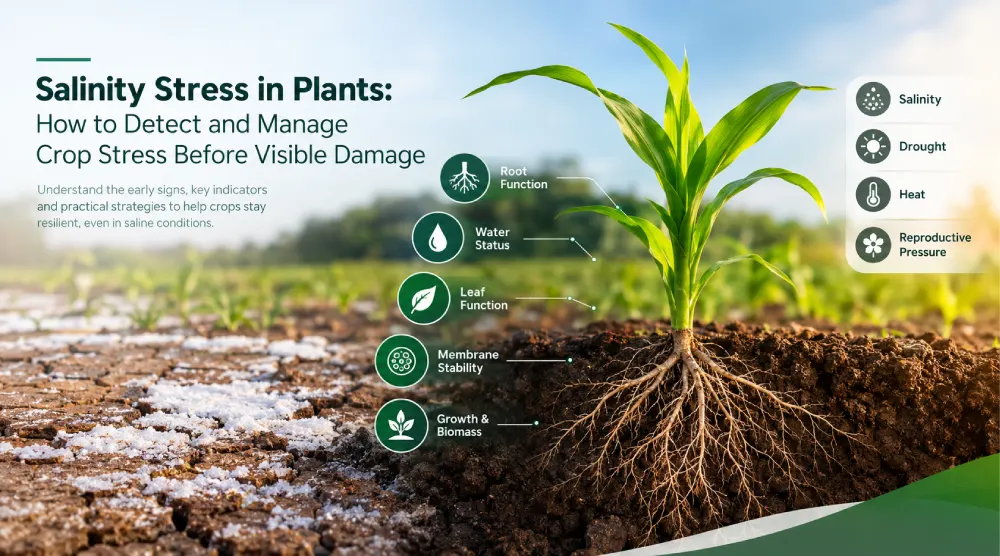
Salinity Stress in Plants: How to Detect and Manage Crop Stress Before Visible Damage

Salinity stress in plants can develop long before visible symptoms appear in the field. A crop may continue to look reasonably healthy while changes are already taking place in its root system, water balance, leaf function, and overall growth.

This is why managing salinity should not begin only when leaves start showing injury. Understanding the crop’s condition before and during exposure can help growers and technical teams make better decisions about stress management.

Crop salinity stress is influenced by several factors, including the crop and variety, growth stage, salinity level, duration of exposure, soil conditions, drainage, irrigation-water quality, temperature, and crop management practices.

A preventive approach therefore starts with understanding how the crop responds before the damage becomes obvious.

What Is Salinity Stress in Plants?

Salinity stress occurs when excessive soluble salts accumulate in the plant’s growing environment, affecting the crop’s ability to maintain normal water and nutrient balance.

Salinity can develop gradually through irrigation water, fertigation practices, poor drainage, or the accumulation of salts in the soil over time. The impact is not necessarily the same across crops or even across different growth stages of the same crop.

For example, a young crop during establishment may respond differently to saline conditions than a mature crop exposed during flowering or fruit development.

This makes plant salinity tolerance a crop- and stage-specific consideration rather than a single characteristic that can be applied universally.

Why Visible Symptoms May Appear Too Late

One of the challenges with salinity stress is that visible symptoms are often the result of processes that have already been developing below the surface.

By the time growers observe symptoms such as reduced growth, leaf injury, premature senescence, or poor crop development, the plant may already have experienced changes in:

  • Root development
  • Water uptake
  • Relative water content
  • Chlorophyll function
  • Biomass accumulation
  • Membrane stability
  • Flower or fruit retention

This is why salinity stress management can benefit from measurements that show what is happening inside the crop before severe visual decline occurs.

What Determines Crop Response to Salinity?

There is no single factor that determines how a crop will respond to saline conditions. A useful assessment considers several factors together.

1. Crop and Variety

Different crops and varieties can have different levels of sensitivity to salinity. Genetic characteristics can influence how effectively a plant maintains growth and physiological function under stress.

2. Growth Stage

The timing of exposure matters.

During establishment, root development and seedling vigour are particularly important. During the vegetative stage, root and shoot expansion and canopy development become important indicators. During reproduction, flower retention, fruit development, and yield stability become more critical.

3. Salinity Level and Duration

The severity and duration of exposure both influence the response. Short-term exposure and prolonged exposure can produce different physiological effects, even when the crop is exposed to similar conditions.

4. Soil and Drainage

Soil type and drainage influence how salts move and accumulate around the root zone. Poor drainage can increase the persistence of saline conditions and create additional pressure on the crop.

5. Irrigation-Water Quality

Irrigation water can be an important source of salts. Monitoring water quality can therefore provide useful information when assessing the risk of crop salinity stress.

Root Function: An Early Indicator of Crop Stress

Roots are the first part of the plant to interact with the growing environment.

Under salinity pressure, changes in root development can provide useful information about how the crop is responding. Depending on the programme and crop, technical assessments may include:

  • Root length
  • Root volume
  • Secondary root development
  • Root fresh weight
  • Root dry weight
  • Root-to-shoot ratio

A larger root system alone does not automatically demonstrate salinity tolerance. The more useful question is whether the plant is maintaining sufficient root function to support water and nutrient movement while stress develops.

This is particularly important because root changes may occur before major symptoms become visible above ground.

Relative Water Content and Plant Water Status

Salinity can interfere with the plant’s ability to maintain water balance.

Relative Water Content (RWC) is one parameter that can help assess the hydration status of plant tissues. Comparing RWC before and during exposure can help technical teams understand the crop’s starting condition and how its water status changes as stress develops.

However, RWC is most informative when interpreted alongside other measurements rather than used as a stand-alone indicator.

Root development, canopy condition, biomass, and other physiological parameters can provide additional context.

Monitoring Green-Leaf Function

A crop can remain visibly green while its productivity is already being affected.

Measurements such as SPAD readings, chlorophyll index, chlorophyll fluorescence, leaf area, and leaf-senescence percentage can help assess changes in leaf function and canopy development.

These measurements can be particularly useful when combined with water-status, growth, biomass, and yield observations.

The objective is not simply to determine whether a crop remains green. It is to understand whether the crop is maintaining the functions required for continued growth and productive development.

Membrane Stability Under Salinity Stress

Salinity can also affect cellular stability.

Where validated protocols are available, electrolyte leakage and other membrane-stability measurements can provide additional information about tissue condition under a defined stress treatment.

These measurements should not be treated as independent proof of plant protection. Their value comes from comparing them with other physiological and structural indicators under controlled or clearly defined conditions.

This broader approach can make salinity stress indicators more meaningful for technical evaluation.

Looking at the Whole Plant

Salinity affects both below-ground and above-ground development.

A technical assessment may therefore include:

  • Plant height
  • Stem diameter
  • Leaf number
  • Branch number
  • Root fresh and dry weight
  • Shoot fresh and dry weight
  • Canopy development
  • Biomass retention
  • Flower and fruit retention
  • Yield-related outcomes

Looking at multiple parameters provides a more complete picture of how the crop is responding.

Instead of asking whether the plant is completely unaffected, the more useful question is whether enough structural and physiological function is being maintained for the crop to continue developing and recover when conditions improve.

How Salinity Response Changes With Crop Stage

A useful salinity stress management programme should consider the crop’s development stage.

Establishment Stage

Important observations may include:

  • Germination
  • Early root development
  • Seedling vigour
  • Stand uniformity
  • Survival

Vegetative Stage

The focus can shift towards:

  • Root and shoot expansion
  • Water status
  • Green-leaf continuity
  • Biomass accumulation
  • Canopy development

Reproductive Stage

At this stage, assessments may include:

  • Flower retention
  • Fruit retention
  • Reproductive continuity
  • Biomass retention
  • Yield stability

The same salinity level may therefore have a different practical impact depending on when exposure occurs.

A Three-Stage Approach to Salinity Stress Management

Rather than waiting for visible damage, a preventive programme can be structured around three stages.

1. Before Stress Intensifies

The first step is to understand the crop’s starting condition.

Questions may include:

  • Is the root system sufficiently developed?
  • Is the canopy active?
  • Is plant water status stable?
  • What is the expected salinity level?
  • Is the intervention appropriately timed?

Establishing a baseline makes later measurements more meaningful.

2. During the Stress Period

Once exposure occurs, the focus shifts towards tracking the crop’s response.

Parameters may include:

  • Root development
  • Relative Water Content
  • Chlorophyll status
  • Canopy condition
  • Biomass
  • Membrane stability

The purpose is to understand whether crop function is being maintained as pressure develops.

3. At the Productive Outcome

The final assessment should connect physiological observations with meaningful crop outcomes.

These may include:

  • Survival
  • Recovery growth
  • Biomass retention
  • Canopy continuity
  • Flower and fruit retention
  • Yield stability

This final stage helps distinguish an early physiological response from an outcome that actually matters to crop productivity.

The Role of Preventive Crop Stress Assessment

Salinity cannot always be avoided. However, its risk can often be identified earlier through information about soil conditions, irrigation-water quality, drainage, crop history, and expected exposure.

This is where preventive soil salinity management becomes important.

Rather than responding only after visible decline, growers and technical teams can establish baseline crop conditions, understand the expected stress environment, select appropriate measurements, and monitor the crop’s response over time.

For organisations developing or evaluating crop solutions, this type of structured assessment can also help connect product performance with measurable biological outcomes.

Can Biostimulants Support Crop Stress Management?

Biostimulants are one area being explored for improving plant growth, nutrient and water utilisation, and crop resilience under abiotic stress.

Trishul Biotech’s biostimulant portfolio focuses on formulations combining different biological and nutritional components to support crop growth and tolerance to abiotic stress. Its stress-management approach includes solutions designed to help alleviate the impact of environmental stress on crops.

For example, Trishul Biotech’s seaweed-based products are positioned around plant growth, root development, crop vigour, and resilience to adverse environmental conditions.

However, product performance should be evaluated according to the specific crop, stress condition, application timing, and measurable outcomes rather than assuming that one solution will work equally across every crop or stress scenario.

How to Build a More Informed Salinity Strategy

A practical approach to plant salinity tolerance starts with measurement rather than assumptions.

A programme can bring together:

  1. Risk assessment – Understand soil, water, drainage, and expected salinity exposure.
  2. Baseline measurement – Establish crop condition before stress intensifies.
  3. Stage-specific monitoring – Track the parameters most relevant to the crop’s growth stage.
  4. Physiological assessment – Monitor water status, chlorophyll function, root development, and other relevant indicators.
  5. Structural assessment – Track root and shoot growth and biomass.
  6. Productive assessment – Connect physiological responses with recovery, reproductive performance, and yield.

This creates a more complete picture than relying on visible symptoms alone.

Final Thoughts

Salinity stress in plants is not simply a problem that begins when leaves show damage. The response can develop progressively through changes in root function, water balance, leaf activity, structural development, and reproductive performance.

That is why early assessment matters.

Understanding the crop before exposure, monitoring its response during stress, and evaluating the eventual productive outcome can provide a stronger foundation for salinity stress management.

In production systems where salinity is a known risk, the important question is not only whether stress can be seen.

It is whether the crop is prepared for the pressure before the damage becomes visible.

Explore Trishul Biotech’s Crop Stress Solutions

Trishul Biotech works across agricultural biotechnology, including biostimulants, biofertilisers, crop protection, soil health, and stress-management solutions. The company also provides soil health analysis, water analysis, plant health analysis, and fertiliser analysis, which can support a more data-driven approach to crop and input assessment. For more information, contact sales@trishulbiotech.com.

Also Read:-

More Useful Links:-

Agricultural Biotechnology Company | Organic Fertilizer For Plants | Biostimulant Products In Agriculture
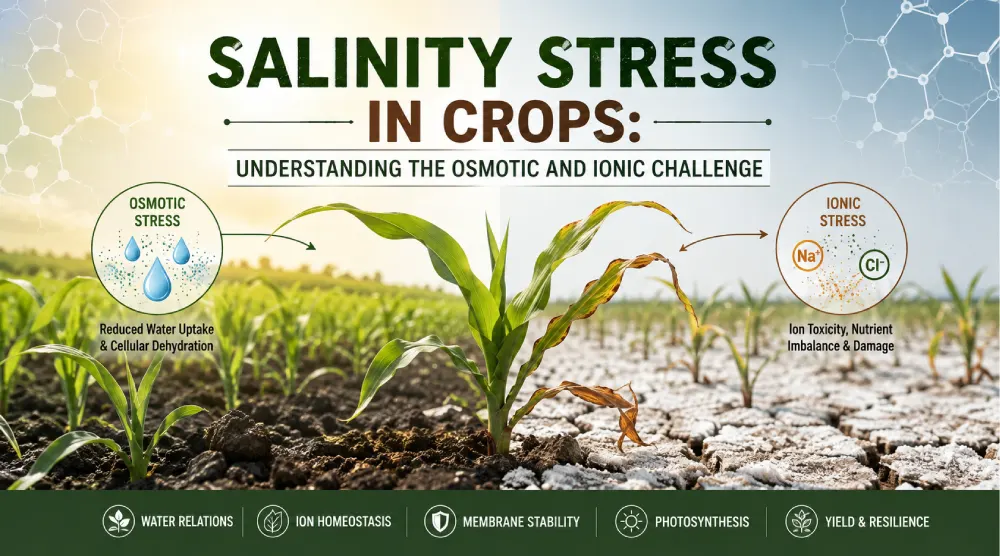
Salinity Stress in Crops: Understanding the Osmotic and Ionic Challenge

Soil salinity challenges crops in more than one way.

Elevated concentrations of soluble salts first change the water relations between soil and plant, making water more difficult for roots to acquire. With continued exposure, ions such as sodium and chloride can accumulate in plant tissues and interfere with nutrient balance, cellular metabolism and photosynthetic function.

Understanding these different components is important because managing the salinity of the soil and understanding how the plant is responding to that salinity are not the same thing. This distinction is central to salinity stress in crops and plant salinity stress management.

One Salinity Problem, Multiple Physiological Effects

Plant responses to salinity are commonly described through two interacting components: osmotic stress and ionic stress.

Osmotic stress

As salt concentration increases in the soil solution, its water potential declines.

This makes water uptake more difficult for the plant even when the soil itself still contains moisture. This process is an important component of osmotic stress in plants.

The crop may respond by reducing stomatal conductance and growth while adjusting its internal water relations to conserve water and maintain cellular hydration.

Ionic stress

With prolonged exposure, sodium and chloride may accumulate in plant tissues.

Excessive accumulation can interfere with ion homeostasis, nutrient balance and cellular metabolism. The relative importance of sodium and chloride varies among crop species and growing conditions.

Salinity tolerance therefore involves more than simply continuing to absorb water.

Plants must simultaneously regulate water relations and maintain suitable ionic conditions inside their tissues.

Why Na⁺ and K⁺ Matter

Potassium is essential for numerous physiological and enzymatic processes in plants.

Under saline conditions, excessive sodium can interfere with potassium uptake, transport and cellular function.

For this reason, maintaining appropriate K⁺/Na⁺ homeostasis is an important component of salinity tolerance in many crops.

Researchers commonly measure sodium and potassium concentrations in roots or shoots to understand how effectively plants are regulating ionic balance.

However, tissue Na⁺/K⁺ balance should be considered one part of a broader salinity-response assessment rather than a standalone measure of tolerance.

Salinity Also Creates Secondary Oxidative Pressure

Osmotic and ionic stress can disturb cellular metabolism and increase the production of reactive oxygen species.

At controlled concentrations, ROS participate in normal cellular signaling. Under severe or prolonged stress, however, excessive ROS can contribute to oxidative damage affecting membranes, proteins, pigments and other cellular structures.

Plants respond through antioxidant systems and other protective mechanisms.

Researchers may therefore use measurements such as antioxidant enzyme activity, lipid-peroxidation indicators such as MDA, or electrolyte leakage when investigating the cellular effects of salinity.

These measurements are scientifically useful indicators of stress physiology, but they should be interpreted together with water status, photosynthetic performance, growth and yield.

Photosynthesis Under Salinity

Photosynthesis can be affected at several levels during salinity stress in plants.

The osmotic component may reduce stomatal conductance and CO₂ availability, while prolonged ionic and oxidative stress can affect chloroplast function and photosynthetic metabolism.

Chlorophyll content and chlorophyll-fluorescence measurements can therefore contribute to evaluating the photosynthetic response.

One commonly used fluorescence parameter is Fv/Fm, which estimates the maximum quantum efficiency of photosystem II in dark-adapted tissue.

A decline in Fv/Fm can indicate that stress has begun to affect PSII function. However, it should not be assumed that Fv/Fm will decline under every level of salinity, and it is most useful when interpreted alongside other physiological measurements.

Water Status and Canopy Temperature

Because salinity imposes an osmotic constraint on water uptake, plant water relations are an important part of salt-stress in plants assessment.

Relative Water Content (RWC) can provide information about tissue hydration.

Canopy temperature can provide another perspective.

When osmotic stress restricts stomatal conductance and transpiration, the crop’s capacity for transpirational cooling may decline. Measurements such as Canopy Temperature Depression (CTD) can therefore help characterize crop response under defined stress conditions.

Canopy temperature is influenced by many environmental variables and should not be used alone to diagnose salinity.

Moving from Cellular Response to Crop Performance

No single measurement demonstrates salinity tolerance.

A more useful evaluation links several levels of response:

Stress environment
→ salinity or EC challenge

Plant physiological response
→ water status, photosynthetic function and membrane integrity

Whole-plant response
→ senescence, survival and recovery

Productive response
→ yield performance and appropriate stress indices

This distinction matters commercially.

An EC reading describes the environment surrounding the roots. Physiological and agronomic measurements describe how the crop actually responds to that environment.

Stressilient: Supporting Crop Resilience Under Abiotic Stress

Within the Upcrop® Technology Platform, Stressilient is designed to support crop resilience under abiotic stress conditions.

Its technical approach focuses on supporting physiological processes associated with osmotic adjustment, membrane stability, antioxidant defense and cellular homeostasis during periods of environmental stress.

Stressilient performance is evaluated through complementary physiological and whole-plant parameters including:

  • Relative Water Content
  • Membrane Stability
  • Fv/Fm
  • Canopy Temperature Depression
  • Leaf Senescence Index
  • Survival Rate
  • Recovery after stress
  • Stress Tolerance Index
  • Stress Yield Stability Index
  • Stress Susceptibility Index

Together, these parameters help build a measurable picture of how the crop performs during stress and how effectively it recovers afterward.

The objective is not to claim that Stressilient removes salts from the soil or lowers soil EC.

Its positioning is instead centered on supporting plant performance under defined abiotic-stress conditions.

That distinction is important.

Managing the salinity of the soil and supporting the physiological resilience of the crop are different agronomic functions.

Measuring Yield Stability Under Stress

Physiological measurements explain what happens inside the crop, but productive performance remains an important endpoint.

Stress indices can help compare crop performance under stressed and non-stressed conditions.

Stress Tolerance Index — STI

STI considers performance under both stress and non-stress environments and can help identify treatments or genotypes combining productive potential with stress performance.

Yield Stability Index — YSI

YSI compares yield under stress with yield potential under non-stress conditions.

Stress Susceptibility Index — SSI

SSI provides an indication of relative yield sensitivity to stress while accounting for overall stress intensity.

These indices describe different aspects of stress performance.

They should therefore be treated as complementary measurements, not compressed into a single universal “salinity-tolerance score.”

A Better Way to Think About Salinity Management

Salinity management begins with understanding the soil environment, but it should not end there.

Soil EC provides essential information about salinity pressure.

Plant measurements reveal the biological consequence of that pressure.

A crop’s response can involve:

  • osmotic adjustment,
  • regulation of water loss,
  • maintenance of ion homeostasis,
  • protection of membrane and photosynthetic function,
  • control of premature senescence,
  • survival during stress, and
  • recovery when conditions improve.

This is why credible salinity-resilience programs should distinguish between changing the soil’s salt status and supporting how the plant functions while experiencing salt stress.

For biostimulant products for agriculture inputs, the scientifically defensible pathway is:

Defined salinity stress → measurable physiological response → whole-plant resilience → recovery → productive performance.

That framework provides a stronger foundation than broad claims such as “removes salt,” “neutralizes salinity,” or “makes crops salt-proof.”

Also Read:-

More Useful Links:-

Agricultural Biotechnology Company | Organic Fertilizer For Plants | Biostimulant Products In Agriculture
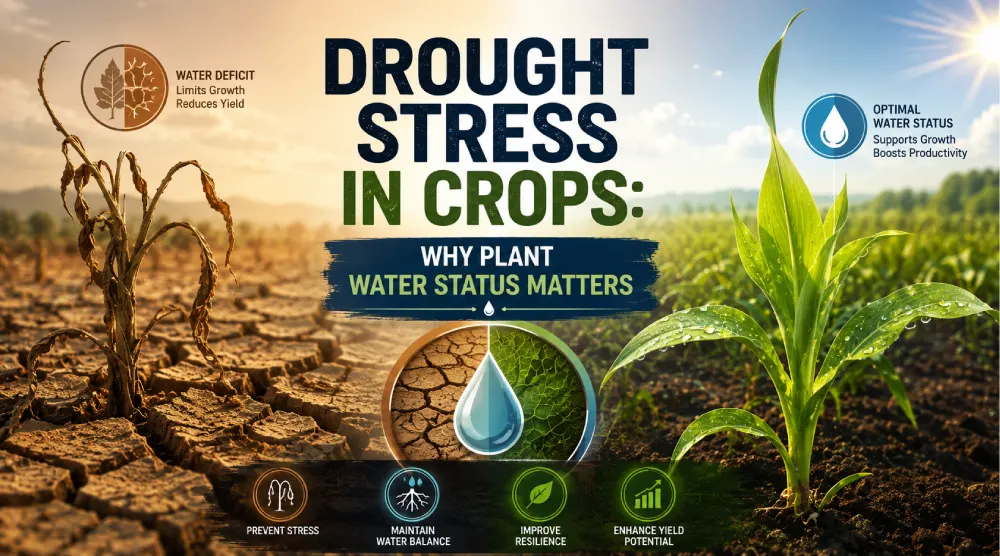
Drought Stress in Crops: Why Plant Water Status Matters

A crop can appear healthy even while water limitation has already begun changing its physiology.

Visible wilting, leaf rolling and premature senescence are useful field indicators of drought stress, but they are not necessarily the first responses. As soil water availability declines, plants begin adjusting water use, gas exchange and cellular metabolism before severe visual symptoms become apparent.

Understanding these early responses is important because successful drought management depends not only on the amount of water present in the soil, but also on how effectively the crop maintains its internal water status and physiological function.

Soil Moisture and Plant Water Status Are Not the Same Thing

Soil moisture tells us how much water is present in the root zone.

Plant water status tells us how the crop is actually responding to that available water.

Useful indicators include:

  • Relative Water Content (RWC)
  • Leaf water potential
  • Stomatal conductance
  • Transpiration
  • Canopy temperature

Together, these measurements provide information about plant hydration, water loss and the physiological consequences of developing moisture stress.

Two fields with similar soil moisture may therefore show different crop responses depending on rooting depth, soil characteristics, evaporative demand, crop stage and the plant’s ability to access and regulate water.

What Happens When Water Becomes Limited?

One of the earliest responses to declining plant water availability is often a reduction in stomatal conductance.

Stomata regulate both water loss and carbon dioxide entry into the leaf. Closing them helps conserve water, but it also restricts CO₂ uptake and can reduce photosynthetic carbon assimilation.

As drought becomes more severe or prolonged, additional changes may occur, including:

  • Declining tissue hydration and Relative Water Content
  • Reduced leaf water potential
  • Loss of cellular turgor
  • Reduced photosynthetic activity
  • Changes in membrane integrity
  • Increased oxidative pressure
  • Reduced leaf expansion and biomass accumulation

Research across a wide range of species shows that drought responses are strongly influenced by stress intensity and duration. Mild water limitation may primarily affect stomatal behavior and carbon assimilation, while more severe drought can produce broader effects on photosynthetic machinery, membranes and cellular metabolism.

Why Canopy Temperature Matters

Transpiration helps cool plant leaves.

When stomatal closure restricts transpiration during water deficit, canopy temperature may rise relative to well-watered plants.

This relationship makes canopy temperature and thermal imaging useful tools for assessing crop water stress when measurements are interpreted together with weather conditions, radiation, humidity, soil moisture and crop architecture.

Canopy Temperature Depression (CTD)—the difference between air and canopy temperature—is one useful field parameter for studying a crop’s ability to maintain transpirational cooling.

It should not, however, be interpreted in isolation.

Relative Water Content: A Direct View of Plant Hydration

Relative Water Content, or RWC, is widely used to assess the hydration status of plant tissues.

Rather than measuring only water availability in the soil, RWC helps indicate how much water leaf tissue retains relative to its fully hydrated condition.

Under drought, plants that maintain relatively higher tissue hydration may be better able to sustain cell turgor and physiological activity than plants showing a rapid decline in water status.

For this reason, RWC is a useful parameter when comparing crop response to moisture deficit.

What About Chlorophyll Fluorescence?

Chlorophyll fluorescence provides useful information about photosynthetic function.

The commonly measured Fv/Fm ratio estimates the maximum quantum efficiency of photosystem II in dark-adapted tissue.

However, Fv/Fm should be interpreted carefully during drought.

Under mild or moderate drought, photosynthesis may decline primarily because stomatal closure limits CO₂ availability while Fv/Fm changes very little. More substantial changes in Fv/Fm are often associated with stronger or prolonged stress affecting photosystem II.

This makes Fv/Fm most useful as part of a broader physiological assessment rather than as a standalone drought indicator.

Membrane Stability and Drought Injury

Water deficit can also affect cellular membranes.

As drought severity increases, oxidative stress and changes in membrane structure can compromise membrane integrity.

Researchers commonly evaluate this through measurements such as electrolyte leakage and membrane stability.

Malondialdehyde (MDA) is also widely used experimentally as an indicator associated with lipid peroxidation and oxidative membrane injury.

These are scientifically useful drought-stress measurements, but they should be interpreted together with plant water status, photosynthetic responses and whole-plant performance.

Roots Still Matter—But They Are Only One Part of Drought Resilience

Root architecture plays an important role in water acquisition.

Rooting depth, root distribution, hydraulic properties and effective root-soil contact can influence how well a crop accesses water during periods of declining soil moisture.

But drought resilience cannot be described by root size alone.

The final response reflects the interaction between water acquisition and water conservation, including:

  • Root system function
  • Stomatal regulation
  • Tissue hydration
  • Osmotic adjustment
  • Membrane stability
  • Photosynthetic performance
  • Developmental stage
  • Recovery after stress

This is why drought resilience is best evaluated using multiple complementary measurements.

From Water Status to Field Performance

A useful drought-stress evaluation should connect physiological response with whole-plant performance.

Relevant observations may include:

Plant water status

  • Relative Water Content
  • Leaf water potential
  • Stomatal conductance
  • Canopy temperature

Physiological integrity

  • Membrane stability
  • Chlorophyll fluorescence
  • Photosynthetic performance

Whole-plant response

  • Leaf senescence
  • Survival
  • Recovery time
  • Biomass and growth

Productive response

  • Yield under stress
  • Yield under non-stress conditions
  • Appropriate stress-tolerance and stability indices

No individual parameter proves drought tolerance on its own. The value comes from understanding how these measurements relate to one another.

Stressilient: Supporting Crop Resilience Under Moisture Stress

Within the Upcrop® Technology Platform, Stressilient is designed to support crop resilience under abiotic stress conditions, including periods of moisture stress.

Its technical positioning focuses on supporting osmotic adjustment, membrane stability, antioxidant defense and cellular homeostasis during stressful environmental conditions.

The Stressilient validation framework evaluates crop response using measurable physiological and performance indicators including:

  • Relative Water Content (RWC)
  • Leaf Senescence Index
  • Plant Survival Rate
  • Fv/Fm
  • Canopy Temperature Depression
  • Membrane Stability
  • Days to Recovery
  • Stress Tolerance Index
  • Stress Yield Stability Index
  • Stress Susceptibility Index

These parameters provide complementary information about how crops maintain physiological function during stress and how effectively they recover afterward.

Evaluating Drought Performance with Stress Indices

Yield-based indices can help summarize crop performance across stress and non-stress environments.

Stress Tolerance Index — STI

STI considers yield performance under both stress and non-stress conditions and is commonly used to identify entries that combine productive potential with stress performance.

A commonly used formulation is:

STI = (Yp × Ys) / (mean Yp)²

where:

  • Yp = yield under non-stress conditions
  • Ys = yield under stress conditions
  • mean Yp = mean non-stress yield of the comparison population

Yield Stability Index — YSI

YSI is commonly expressed as:

YSI = Ys / Yp

It describes the proportion of potential yield maintained under stress.

Stress Susceptibility Index — SSI

SSI evaluates relative yield reduction under stress while considering the overall intensity of the stress environment.

These indices provide different perspectives and should therefore be interpreted as complementary indicators, not as one universal drought-tolerance score.

They are most useful when combined with statistically sound yield comparisons and relevant physiological measurements.

Why Timing Matters

Drought management should begin before severe visual injury becomes established.

Once prolonged water deficit causes extensive tissue senescence, reproductive failure or irreversible cellular injury, complete recovery of lost productivity may not be possible.

Supporting crop physiological function before anticipated stress, during water limitation and during the recovery phase therefore provides a more rational framework for managing moisture stress.

The objective is not to make crops “drought-proof.”

It is to help crops maintain critical physiological functions, tolerate periods of water limitation more effectively and recover when favorable conditions return.

Measuring Resilience, Not Just Symptoms

Effective drought management requires looking beyond soil moisture alone.

Soil measurements describe the water environment.

Plant measurements reveal how the crop is responding to that environment.

Bringing the two together provides a more complete understanding of crop water stress—and a stronger scientific basis for evaluating biological technologies intended to support crop resilience.

For agricultural biotechnology company inputs, the most credible pathway is:

Stress condition → physiological response → measurable resilience → recovery → productive performance.

That is a much stronger foundation than simply claiming that a product makes crops “drought resistant.”

Also Read:-

More Useful Links:-

Agricultural Biotechnology Company | Organic Fertilizer For Plants | Biostimulant Products In Agriculture
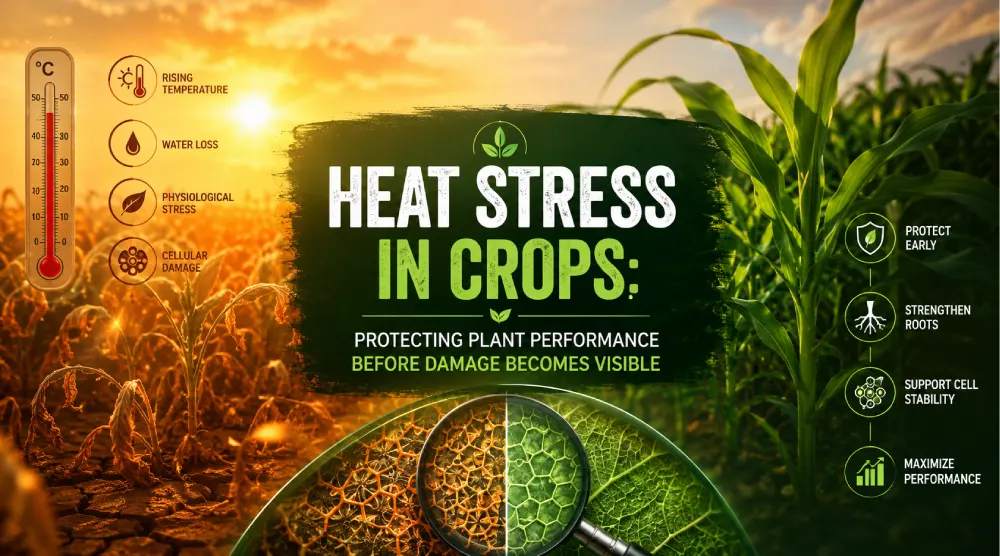
Heat Stress in Crops: Protecting Plant Performance Before Damage Becomes Visible

By the time heat stress becomes visible in the field, important physiological changes may already be underway inside the plant.

Wilting, leaf scorching, premature senescence, and canopy decline are familiar signs of heat injury. But these visible symptoms represent only part of the story. Plants begin responding to elevated temperatures at the cellular and physiological level well before severe external symptoms become apparent.

For growers and agricultural input companies, understanding these early responses is important because crop performance under heat depends not only on avoiding visible injury, but also on maintaining physiological function during stress and recovering effectively once temperatures return to favourable levels.

What Happens Inside a Plant During Heat Stress?

When temperatures exceed the optimum range for a crop, several physiological processes can be affected simultaneously.

Cell membranes can become less stable, proteins and enzymes may lose functional efficiency, and the production of reactive oxygen species (ROS) can increase. When ROS production exceeds the plant’s antioxidant capacity, oxidative damage can affect membranes, proteins, pigments, and other cellular components.

Photosynthesis is also particularly sensitive to excessive temperature. Heat can affect photosystem II activity, chlorophyll stability, carbon assimilation, and stomatal regulation.

The plant therefore faces a difficult balancing act: maintaining photosynthesis and transpirational cooling while conserving sufficient water to sustain cellular function.

Reproductive development can be even more vulnerable. In many crops, flowering, pollen development, pollen viability, germination, fertilization, and early fruit or grain set are among the processes most sensitive to elevated temperatures.

This is why a relatively short heat event during a critical reproductive stage can sometimes have consequences that become apparent only later as reduced fruit set, grain number, yield, or crop uniformity.

Plants Have Their Own Heat-Defense Systems

Plants are not passive during a heat event.

Exposure to elevated temperature activates a coordinated stress response involving heat-shock proteins, antioxidant defense systems, osmotic adjustment, membrane protection, and changes in stomatal regulation.

Heat-shock proteins help maintain protein function and assist with the stabilization or refolding of heat-affected proteins. Antioxidant systems help regulate excessive ROS, while compatible osmolytes and other protective metabolites contribute to cellular homeostasis.

The effectiveness of these responses depends on crop species, genotype, developmental stage, stress intensity and duration, water availability, and the plant’s physiological condition before the stress event.

For this reason, heat tolerance cannot be judged from a single visible characteristic.

Measuring Heat Stress Before Yield Tells the Story

A stronger assessment of crop resilience combines physiological measurements with whole-plant performance.

Relative Water Content (RWC) provides an indication of plant water status and the ability of tissues to maintain hydration during stress.

Membrane stability provides insight into the integrity of cellular membranes under stressful conditions.

Chlorophyll fluorescence, including Fv/Fm, can be used to evaluate the maximum quantum efficiency of photosystem II and identify changes in photosynthetic function associated with stress.

Canopy Temperature Depression (CTD) provides information about the relationship between canopy and ambient temperature. Under appropriate environmental conditions, the ability to maintain a cooler canopy can reflect effective transpirational cooling and plant water status.

At the whole-plant level, leaf senescence, plant survival, recovery time, and subsequent growth and productivity provide additional evidence of how effectively a crop tolerated and recovered from the stress event.

No single measurement tells the complete story. Together, these physiological and agronomic indicators provide a more meaningful picture of crop resilience.

From Stress Response to Yield Stability

Ultimately, successful stress management should be evaluated not only by how a plant looks during stress, but by how well it maintains function, recovers, and preserves productive potential.

Yield-based stress indices can help quantify this response.

The Stress Tolerance Index (STI) is commonly used to compare performance under stress and non-stress conditions while considering yield potential.

Other indices, including Yield Stability Index (YSI) and Stress Susceptibility Index (SSI), can provide complementary information about yield stability and sensitivity to stress.

These indices should not replace physiological measurements or statistical analysis of trial results. Instead, they provide additional tools for translating complex stress responses into commercially meaningful measures of crop performance.

Stressilient®: Supporting Crops Through Abiotic Stress

Within the Upcrop® Technology Platform, Stressilient® is designed to support crop resilience under abiotic stress conditions.

Its technical approach focuses on supporting membrane stability, osmotic adjustment, antioxidant defense, and cellular homeostasis during periods of environmental stress.

The Stressilient validation framework examines crop response across multiple physiological and performance indicators, including:

  • Relative Water Content (RWC)
  • Leaf Senescence Index
  • Plant Survival Rate
  • Membrane Stability
  • Fv/Fm
  • Canopy Temperature Depression
  • Days to Recovery
  • Stress Tolerance Index
  • Stress Yield Stability Index
  • Stress Susceptibility Index

Together, these parameters provide a structured way to evaluate how crops maintain physiological function during stress and how effectively they recover afterward.

Why Timing Matters

Abiotic stress management is not simply about responding after visible damage appears.

Once severe cellular injury, reproductive failure, or tissue senescence has occurred, the opportunity for complete recovery may be limited. Supporting crop physiological resilience before anticipated stress, during stress exposure, and through the recovery period therefore provides a more rational approach to stress-management programs.

This is particularly important around sensitive crop stages such as reproductive bud development, flowering, fruit set, and other periods when environmental stress can strongly influence subsequent productivity.

Building Resilience That Can Be Measured

Climate resilience should mean more than a crop that simply remains green after a stressful week.

A resilient crop should demonstrate an ability to maintain critical physiological functions during stress, limit cellular injury, recover efficiently when favorable conditions return, and preserve productive potential.

For agricultural biological inputs, this also changes how stress-management technologies should be evaluated.

Rather than relying only on broad “anti-stress” claims, credible product positioning should connect mechanism → measurable physiological response → whole-plant recovery → productive performance.

That evidence-based approach provides growers, agronomists, formulators, and distributors with something far more useful than a claim:

a measurable framework for understanding crop resilience.

Also Read:-

More Useful Links:-

Agricultural Biotechnology Company | Organic Fertilizer For Plants |Biostimulant Products In Agriculture

Root-to-Canopy Signal: How Underground Strength Drives Visible Crop Performance

Crop performance is often judged by what we can see above the soil. Healthy leaves, a dense canopy, vigorous plant growth, flowering, and fruit development are all visible indicators of a successful crop.

However, these above-ground responses rarely develop on their own.

A crop’s visible growth begins with what happens below the surface. Healthy roots improve water uptake, nutrient absorption, and plant stability, creating the foundation for stronger canopy development. We call this relationship between underground growth and visible crop response the root-to-canopy signal.

Rather than viewing roots and canopy as separate systems, technical teams can build a clearer understanding of crop performance by evaluating both together.

Why the root-to-canopy signal matters

Looking only at the root system or only at the canopy provides an incomplete picture of crop performance.

Healthy roots support nutrient uptake and water availability, while the canopy reflects how effectively those resources are used for plant growth. Evaluating both together creates a more reliable measure of crop health.

This approach links root architecture and canopy development through observations that can be recorded and compared.

It is also important to recognise that canopy performance depends on multiple factors, including irrigation, nutrition, climate, soil health, crop genetics, and management practices. Root development is one important contributor within this larger production system.

When root measurements are combined with canopy observations, technical evaluations become more meaningful and easier to validate.

The below-ground foundation

Strong roots provide the foundation for consistent crop establishment and long-term performance.

Several measurable root performance indicators help evaluate below-ground development.

Root ParameterWhat it helps explain
Root lengthSoil exploration and water access
Root volumeActive root-zone development
Root biomassBelow-ground growth and reserves
Feeder-root developmentNutrient and water absorption
Root-to-shoot balanceAllocation between roots and canopy
Tissue NPKNutrient movement within the plant

Together, these indicators provide valuable insights into below-ground crop development before visible changes appear above the soil.

Understanding canopy performance indicators

While roots work below the surface, the canopy reflects the crop’s response through measurable growth signals.

Common canopy performance indicators include:

Canopy ParameterWhat it helps explain
Leaf areaCanopy development
SPADChlorophyll status
NDVICanopy greenness and vegetation health
Plant heightVegetative growth
Stem diameterStructural strength
Canopy uniformityCrop consistency across the field

These measurements become most valuable when they are evaluated alongside root development and crop-stage observations rather than as standalone indicators.

Connecting root performance with canopy development

A well-developed root system enables crops to access water and nutrients more efficiently.

When strong root architecture supports early establishment, crops are better positioned to produce healthier canopy growth under suitable growing conditions.

Working from the root-to-canopy signal allows technical teams to evaluate how improvements in root development relate to canopy measurements such as leaf area, SPAD, NDVI, nutrient status, and field uniformity.

Instead of making broad claims about stronger growth, measurable data helps explain which root parameters improved, which canopy responses were observed, and how those outcomes were evaluated.

RaizUp: supporting measurable crop performance

RaizUp is the UpCrop pillar focused on root architecture, early establishment, rhizosphere activity, and nutrient capture, backed by Trishul Biotech’s Our Technology platform.

As part of Trishul Biotech’s biostimulant portfolio, RaizUp supports technical discussions around measurable root performance indicators and their relationship with canopy development.

Its framework encourages evaluation through multiple measurement layers, including root growth, tissue nutrient status, and canopy observations, helping technical teams communicate performance with greater confidence.

This balanced approach supports scientific credibility without over-claiming crop outcomes.

Why this matters for technical B2B buyers

Today’s B2B buyers expect biological products to be supported by measurable data.

Root measurements explain below-ground development, while canopy observations demonstrate how crops respond throughout the growing cycle.

By combining these indicators, biological companies can present stronger technical evidence, improve product positioning, and create more meaningful discussions with distributors, formulation partners, and commercial teams.

A performance-based framework also makes technical communication easier to understand across research, sales, and agronomy functions.

Conclusion

Healthy crop growth begins below the soil.

By connecting root architecture and canopy development, technical teams gain a clearer view of how underground processes influence visible crop growth.

Parameters such as root length, root biomass, root-to-shoot balance, tissue NPK, SPAD, NDVI, and leaf area provide a more complete picture of crop performance than visual observations alone.

At Trishul Biotech, the opportunity lies in evidencing the root-to-canopy signal through data-driven evaluation rather than broad biological claims.

The canopy reflects what the roots make possible.

Also Read:-

Stop Selling Rooting. Start Selling Establishment Performance

The market for agricultural biologicals is growing rapidly. Seed companies, fertilizer manufacturers, crop nutrition brands, and biological input providers are increasingly investing in solutions that improve crop performance and sustainability.

As this category expands, however, many products begin to sound the same.

“Better roots.” “Stronger plants.” “Improved growth.”

While these messages are familiar, they rarely explain how a product delivers value or what improvements growers can actually measure.

For B2B agri-input companies, the opportunity is no longer about making louder rooting claims. It is about communicating establishment performance through measurable crop responses and a clearer technical story.

Why rooting claims need to evolve

Healthy roots are essential to successful crop establishment. They anchor the plant, absorb water and nutrients, and provide the foundation for vigorous early growth.

The challenge is that simply claiming “better roots” tells customers very little.

It does not explain whether the crop established more uniformly, whether root development improved, or whether stronger root architecture resulted in better nutrient uptake. Nor does it show how those improvements contributed to healthier crop performance.

This is where the messaging needs to change.

Instead of relying on broad marketing claims, biological companies should focus on explaining how root systems influence early crop establishment and long-term plant performance through quantifiable outcomes.

That shift—from rooting claims to establishment performance—creates a stronger and more credible value proposition.

What does establishment performance mean?

Establishment performance refers to how effectively a crop begins its growth after germination or transplanting.

Rather than focusing on a single rooting claim, it evaluates multiple parameters that together explain how well a crop establishes, develops, and prepares for the next stage of growth.

ParameterWhat it helps explain
Germination speedHow quickly the crop begins establishment
Seedling vigourEarly strength and uniformity
Root lengthSoil exploration and access
Root volumeActive root-zone development
Root biomassBelow-ground foundation
Feeder-root developmentExpanded nutrient capture surface
Root-to-shoot ratioBalance between root and canopy development
Tissue NPKNutrient capture and movement

Looking at these parameters together provides a much clearer understanding of root performance than relying on visual observations alone.

The challenge with generic biological messaging

As more biological products enter the market, many brands unintentionally communicate similar messages.

When every product promises stronger roots or healthier plants, customers find it difficult to understand what makes one solution different from another. As a result, buying decisions often shift toward pricing rather than technical value.

A stronger product story should answer three important questions:

  • What production challenge does the product address?
  • Which biological process supports the solution?
  • Which measurable parameters demonstrate performance?

When communication is supported by data rather than generic claims, technical credibility increases and product differentiation becomes much stronger.

RaizUp: a below-ground performance layer

RaizUp is the UpCrop pillar dedicated to root architecture, early establishment, rhizosphere activity, and nutrient capture, supported by Trishul Biotech’s Our Technology platform.

As part of Trishul Biotech’s biostimulant portfolio, RaizUp provides a structured framework for discussing below-ground performance using specific crop parameters.

It connects healthy root development with practical indicators such as:

  • Germination speed
  • Seedling vigour
  • Root biomass
  • Feeder-root development
  • Root-to-shoot balance
  • Nutrient capture

This approach enables technical, commercial, and marketing teams to communicate product performance with greater confidence and consistency.

Generic wordingRaizUp framing
Better rootsMeasurable root architecture
Better startEstablishment performance
Stronger seedlingsGermination speed and seedling vigour
Better uptakeNutrient capture through root access
Stronger plantRoot-to-shoot balance and canopy-linked signals

Why this matters for B2B biological companies

A successful biological product needs more than good technical performance—it also needs a clear and defensible story.

  • Different customer groups evaluate products from different perspectives.
  • Seed companies often focus on germination and uniform emergence.
  • Crop nutrition companies want stronger nutrient uptake.
  • Protected cultivation and nursery programs prioritise consistent establishment.

By presenting data-backed indicators instead of broad claims, biological companies can create communication that is relevant across technical, commercial, and marketing teams.

Instead of simply promoting better rooting, they can demonstrate how healthy root development contributes to stronger establishment, nutrient efficiency, and long-term crop performance.

Conclusion

Healthy roots are the beginning of successful crop performance—but they are only part of the story.

The real opportunity lies in connecting root architecture, early establishment, nutrient capture, and root-to-shoot balance through measurable performance indicators.

For B2B biological portfolios, this creates stronger product differentiation and more meaningful customer conversations.

RaizUp supports this shift by providing a structured framework that moves beyond generic rooting claims toward measurable establishment performance.

Because the crop starts long before it becomes visible above the soil. Build the crop from below.

Also Read:-

Transplant Shock Is a Restart Problem

Transplanting is not simply moving a seedling from one place to another. It marks the start of a critical transplant establishment phase that determines how quickly, and how successfully, a crop resumes healthy growth.

Whether seedlings move from a nursery to the field, from trays to substrates, or from a controlled environment into a production system, they must rebuild their connection with the new surroundings. How well they manage this depends on how efficiently the root system adapts and resumes its functions.

Recovery begins when roots reconnect with the growing medium, restore water uptake, stabilise nutrient movement, and regain a healthy root-to-shoot balance. Rather than treating transplant shock as a passing visual symptom, growers are better served by recognising it as an establishment challenge that starts below ground.

What Really Happens After Transplanting?

Immediately after transplanting, a crop faces sharp changes in its growing conditions. Moisture availability, nutrient distribution, temperature, substrate characteristics, microbial activity, and handling stress all shape how quickly the plant adapts.

During this period, the crop has to rebuild effective root contact with the growing medium to restore normal water and nutrient uptake. When that recovery is delayed, the effects show up both above and below ground.

What growers tend to see:

  • Uneven crop stands
  • Reduced early vigour
  • Lower transplant survival

What is happening underground:

  • Weak root anchorage
  • Slower nutrient uptake
  • Delayed feeder-root development

The real question is not whether a transplant survives, but how quickly it re-establishes and returns to active growth.

Root Recovery Begins Below Ground

A successful transplant is ultimately a story of below-ground recovery.

Healthy root architecture lets a plant regain access to water and nutrients while supporting long-term growth. Gains in root length, root volume, root biomass, and feeder-root development all contribute to faster, more consistent establishment.

A balanced root-to-shoot ratio ensures that above-ground growth keeps pace with the recovering root system, helping the plant settle in quickly and perform steadily through the season.

Together, these measurable parameters offer a more reliable read on establishment than visual symptoms alone.

ParameterWhat it helps explain
Transplant survival %Overall establishment success
Root lengthRoot reconnection with the growing medium
Root volumeActive root recovery
Root biomassBelow-ground recovery strength
Feeder-root developmentNew water and nutrient absorption points
Root-to-shoot balancePlant balance after transplanting
Early canopy recoveryAbove-ground response following root recovery

Why Transplant Establishment Matters in High-Value Crops

In high-value crops, uniform establishment feeds directly into performance and profitability.

Whether in protected cultivation, vegetable nurseries, fruit crops, or specialty horticulture, uneven establishment can produce inconsistent irrigation response, variable nutrient uptake, irregular canopy development, and uneven harvest maturity.

Uniform establishment, by contrast, lets growers manage irrigation, nutrition, and crop development more efficiently across the whole production cycle.

How RaizUp Supports Establishment

RaizUp is the UpCrop pillar focused on root architecture, early establishment, rhizosphere activity, and nutrient capture, backed by Trishul Biotech’s Our Technology platform.

After transplanting, it supports establishment by encouraging healthy root recovery, stronger feeder-root development, a better root-to-shoot balance, and improved readiness to take up nutrients.

Rather than claiming to eliminate transplant shock, RaizUp aims at measurable gains in root development, transplant survival, and early establishment.

From Transplant Shock to Transplant Establishment

The phrase “transplant shock” fixes attention on temporary symptoms; “transplant establishment” points to measurable performance.

A crop truly restarts when its root system reconnects with the growing medium, restores water and nutrient uptake, holds a healthy root-to-shoot balance, and supports early canopy recovery. This performance-based view gives growers clearer signals of success than appearance alone.

Old framingBetter framing
Reduces shockSupports transplant establishment
Better recoveryRoot recovery after transplanting
Stronger seedlingsImproved early vigour and balance
Better survivalImproved transplant survival under tested conditions
Better growthEarly canopy recovery supported by root recovery

Conclusion

Transplanting is more than moving a seedling — it is a complete restart for the crop.

Successful establishment depends on how effectively the root system reconnects with the growing medium, rebuilds root architecture, drives feeder-root development, and reaches the right root-to-shoot balance.

In high-value crops, strong root recovery underpins higher survival, more consistent establishment, and better season-long performance.

Recovery starts below ground. Build the crop from the roots up.

The First 14 Days: Where Crop Potential Is Programmed

The first crop advantage is not always visible.

A crop does not become strong only when the canopy looks strong. By the time leaves expand and visual vigour appears, the crop has already passed through one of its most important windows: the first few days after germination or transplanting.

This early period is when the crop begins to establish its root system, build seedling uniformity, develop feeder roots, and balance below-ground and above-ground growth.

For seed, nursery, and early-stage crop programs, this makes first 14 days crop establishment a critical performance window.

The crop is not just emerging. It is beginning to program how it will establish.

Why the early crop window matters

The first 14 days influence how uniformly a crop begins its growth cycle.

During this period, the crop is building germination speed, seedling vigour, early root initiation, feeder-root development, root-to-shoot ratio balance, crop stand uniformity, and early nutrient access.

When this stage is weak, the crop may show uneven establishment, delayed growth, poor early root spread, and inconsistent field performance.

This is why early crop establishment should not be treated as a small nursery-stage issue. It is the crop’s first performance layer.

Uniformity begins early

Uniform crop performance does not begin at harvest. It begins with how evenly the crop starts.

If germination is uneven or early plant growth is restricted, the field may carry that variability into later stages.

A stronger early establishment window helps create a more consistent foundation for crop management — and stronger germination uniformity across the stand.

This is where the first 14 days become more than an emergence window. They become an early performance window.

ParameterWhat it helps explain
Germination speedHow quickly the crop begins establishment
Germination uniformityWhether the crop stand develops evenly
Seedling vigourEarly strength and consistency
Root lengthEarly exploration of the growing medium
Root volumeDevelopment of the active root zone
Root biomassStrength of below-ground foundation
Root-to-shoot ratioBalance between root and canopy growth

RaizUp: early establishment as a performance code

RaizUp is positioned around root architecture, early establishment, rhizosphere activity, and nutrient capture.

In the first 14 days, the RaizUp story is focused on the crop’s earliest foundation: how does the crop begin?

A stronger early root system can support more uniform establishment, better root balance, and improved readiness for nutrient capture — reinforcing root system development from the very start.

RaizUp communication should focus on this early-stage logic: the crop starts before the crop is visible.

This makes RaizUp especially relevant for seed companies, nurseries, protected cultivation systems, and early-stage biological programs.

Why this matters for seed and nursery programs

Seed and nursery programs are built around consistency.

Uniform germination, seedling vigour, and early root development help create a more manageable crop start.

For nurseries and transplant systems, early root readiness also supports smoother nursery to field transplant movement, or transition into protected cultivation systems.

The first 14 days therefore deserve focused attention. They are not only about emergence. They are about how the crop prepares for everything that follows through steady crop root development.

Conclusion

The first 14 days are where crop potential begins to take shape.

This is the stage where germination, seedling vigour, early root initiation, and root-to-shoot ratio balance begin setting the foundation for crop uniformity.

For RaizUp, this is the natural space: early establishment, root architecture, and below-ground performance.

The first crop advantage is not always visible. Build the crop from below.

Looking to build seed, nursery, or biological programs around early establishment and root architecture?

Trishul Biotech supports B2B, white-label, and custom formulation partnerships through the UpCrop platform.

Connect with us to explore RaizUp-based formulation and technical collaboration opportunities.

Also Read:-

Nutrition Applied Is Not Nutrition Captured

Fertilizer performance does not begin only with what is applied.

Fertilizer programs are often discussed through grade, dose, timing, solubility, and application method. These factors matter. But they do not complete the crop nutrition story.

For a crop to respond to applied nutrition, the root system must be able to access, absorb, and support nutrient movement. This is the essence of plant nutrient absorption — and it is where most fertilizer conversations stop short.

When root architecture is weak or the soil-root interface is poorly developed, nutrition may be present in the system without being fully expressed in crop performance.

That is why fertilizer performance is not only an application question. It is also a root access (nutrient) question.

Nutrition applied is not always nutrition captured.

The hidden gap in fertilizer response

Across crops and growing conditions, the same nutrition program can deliver different field responses.

Sometimes the difference comes from soil conditions. Sometimes from water availability, stress, crop stage, or application timing.

But one of the most important biological factors is the crop’s own root system.

A weak root system can limit how effectively the crop explores the soil, reaches available nutrients, and supports nutrient uptake in plants.

In this context, nutrient performance cannot be understood only by asking what was applied. The better question is: what can the crop actually capture? This is the core of the nutrient capture vs nutrient applied discussion.

Why root access matters

Roots are the crop’s nutrient-access system.

A stronger root system gives the crop more opportunity to explore the growing medium, interact with the rhizosphere, and access available nutrition through active root zone development.

These parameters move the discussion from fertilizer application alone to root-driven nutrient capture.

ParameterWhy it matters
Root lengthExpands the crop’s soil exploration zone
Root volumeIndicates active root-zone development
Root biomassReflects below-ground strength
Secondary and tertiary rootsExpand the feeder-root network
Root-to-shoot ratioShows balance between root and canopy development
Tissue NPKHelps evaluate nutrient capture and movement
CEC / soil nutrient availabilitySupports soil-root interface interpretation
SPAD / NDVICan help connect nutrient status with canopy response

From nutrient application to nutrient performance

Applied nutrition becomes valuable only when it moves through the crop system.

The root system is the connection point between soil availability, applied nutrition, and crop expression. This is why fertilizer-linked biological programs need a root-zone conversation.

StageKey question
Nutrient appliedWhat nutrition was supplied?
Nutrient accessedCan the root system reach it?
Nutrient capturedCan the crop absorb and move it?
Nutrient expressedDoes it support crop performance?

This last stage — nutrient expressed crop performance — is where fertilizer efficiency ultimately gets measured in the field.

RaizUp and the root-zone performance layer

RaizUp is the UpCrop pillar focused on root architecture, early establishment, rhizosphere activity, and nutrient capture.

Within fertilizer-linked biological programs, RaizUp brings attention to a critical performance layer: the root zone.

Instead of positioning nutrient performance only around fertilizer grade or application, RaizUp connects root system development with measurable nutrient-capture indicators.

RaizUp does not claim to replace fertilizer, and it does not claim that fertilizer dose can be reduced without field validation.

The stronger, evidence-backed position is this: RaizUp supports root architecture and nutrient capture through measurable root, tissue, and soil-root interface parameters — helping the crop use applied fertilizer more effectively, which is the practical basis for fertilizer efficiency claims.

The root zone is the conversion point

The fertilizer journey does not end at application. It continues through the soil-root interface.

This is where roots explore. This is where nutrients become accessible. This is where biology, soil chemistry, and plant physiology interact. This is where applied nutrition begins its movement toward crop performance.

For modern fertilizer-linked biological programs, this is an important shift.

The future conversation is not only: what did we apply? It is also: what did the crop capture, move, and express?

Conclusion

Fertilizer performance is not only about what enters the field. It is also about what enters the crop.

Root architecture, feeder-root development, tissue nutrient status, and soil-root interface activity help explain why the same nutrition program can perform differently across crops and conditions.

For RaizUp, the opportunity is clear: bring root architecture and nutrient capture into the same performance conversation.

Nutrition applied is not nutrition captured. Build the crop from below.

Looking to build a differentiated fertilizer, micronutrient, or biological portfolio around root architecture and nutrient capture?

Trishul Biotech supports fertilizer and micronutrient companies (B2B) through B2B, white-label, and custom formulation partnerships under the UpCrop platform.

Connect with us to explore RaizUp-based formulation and technical collaboration opportunities.

Root Architecture: The Hidden Engine of Crop Performance

The crop starts before the crop is visible.

Before the first strong canopy appears, before flowering begins, before yield is formed, one system is already shaping the crop’s future: its root system.

Root architecture is one of the earliest foundations of crop performance. It determines how a crop anchors, explores the soil, accesses water, captures nutrients, and supports early development.

In agriculture, we often judge crop health by what we see above the soil — plant height, leaf colour, canopy size, flowering. But many performance limitations begin below the surface, in the rhizosphere, well before the crop gives any visible signal.

A weak root system may not immediately look like a problem. Over time, though, it affects establishment, nutrient uptake in plants, water movement, canopy development, and crop uniformity.

Root architecture is not just a root-growth topic. It is the crop’s first performance infrastructure.

Why this matters now

Soil compaction is increasing. Soil biology is declining in many systems. Rainfall is more erratic, heat stress is more frequent, and input costs keep rising.

In this environment, a crop that establishes strong roots early has a real advantage — better nutrient efficiency, more consistent stands, and faster recovery from stress. Root system development is no longer a background factor. It is becoming a first-line defense against an increasingly unpredictable growing environment.

More than root length

Root architecture refers to the structure, spread, and balance of the entire below-ground system.

It includes the primary root system, feeder roots, secondary and tertiary root formation, root biomass, root volume, and the balance between root and shoot growth. Together, these form the core root development parameters used to evaluate below-ground health.

Each parameter tells a different part of the story:

ParameterWhat it helps explain
Root lengthSoil exploration and access
Root volumeActive root-zone development
Root biomassStrength of below-ground foundation
Secondary and tertiary rootsFeeder-root network expansion
Root-to-shoot ratioBalance between root and canopy development
Germination speedEarly establishment momentum
Seedling vigourUniformity and early crop strength
Tissue NPKNutrient capture and movement
SPAD / NDVICanopy-linked performance signals

The hidden foundation of crop performance

Every visible crop outcome has a below-ground foundation.

Canopy growth needs root support. Nutrient response depends on efficient nutrient capture. Water movement needs root exploration. Early uniformity needs a balanced root-to-shoot ratio.

Better roots are not just about more growth. They are about better nutrient capture, stronger crop uniformity, and improved stress recovery.

The conversation should not stop at “better roots.” It should ask: what kind of roots, how are they measured, and how do they support early crop establishment?

When root system development is framed through measurable parameters, the claim becomes more credible — and more useful to agronomists, formulators, and growers alike.

RaizUp: build the crop from below

RaizUp is the UpCrop pillar focused on root architecture, early crop establishment, rhizosphere activity, and nutrient capture.

Its role is to move the conversation from generic rooting claims toward measurable crop root development.

RaizUp brings together root length, root volume, root biomass, root-to-shoot ratio, germination speed, seedling vigour, and nutrient-capture parameters into one integrated root-performance framework.

The idea is simple: the crop starts before the crop is visible. Build the crop from below.

Conclusion

Root architecture is not a secondary growth feature. It is one of the earliest systems shaping crop establishment, nutrient capture, water access, and canopy development.

For biological input programs, the future of rooting claims will depend on measurable root system development and clearly defined root development parameters — not broad growth language alone.

RaizUp places root architecture at the centre of early crop performance.

The crop starts before the crop is visible.

Ready to build a differentiated biological portfolio around root architecture and early establishment?

Trishul Biotech partners with agri-input companies through B2B, white-label, and custom formulation programs under the UpCrop platform.

Talk to our team to explore RaizUp-based formulation and technical collaboration opportunities.