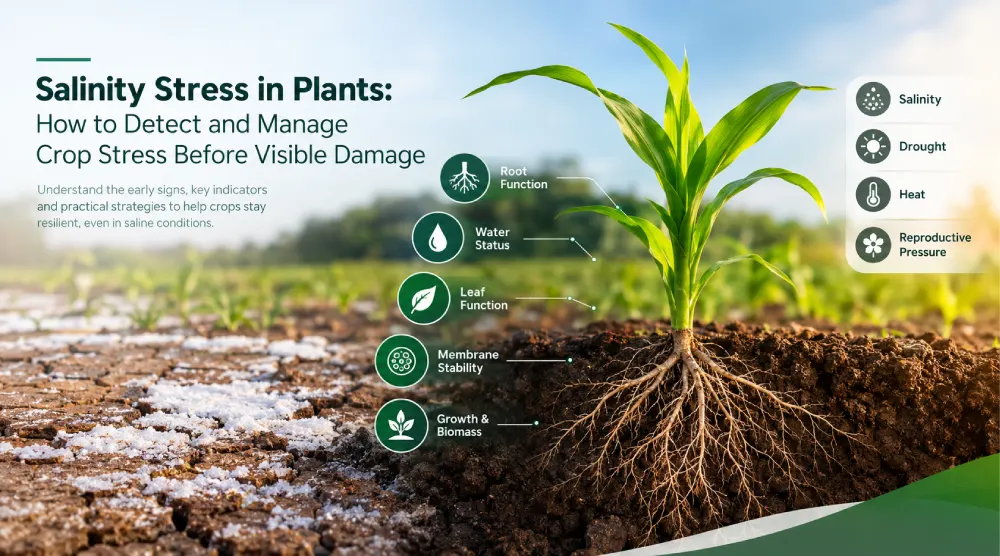
Salinity stress in plants can develop long before visible symptoms appear in the field. A crop may continue to look reasonably healthy while changes are already taking place in its root system, water balance, leaf function, and overall growth.
This is why managing salinity should not begin only when leaves start showing injury. Understanding the crop’s condition before and during exposure can help growers and technical teams make better decisions about stress management.
Crop salinity stress is influenced by several factors, including the crop and variety, growth stage, salinity level, duration of exposure, soil conditions, drainage, irrigation-water quality, temperature, and crop management practices.
A preventive approach therefore starts with understanding how the crop responds before the damage becomes obvious.
What Is Salinity Stress in Plants?
Salinity stress occurs when excessive soluble salts accumulate in the plant’s growing environment, affecting the crop’s ability to maintain normal water and nutrient balance.
Salinity can develop gradually through irrigation water, fertigation practices, poor drainage, or the accumulation of salts in the soil over time. The impact is not necessarily the same across crops or even across different growth stages of the same crop.
For example, a young crop during establishment may respond differently to saline conditions than a mature crop exposed during flowering or fruit development.
This makes plant salinity tolerance a crop- and stage-specific consideration rather than a single characteristic that can be applied universally.
Why Visible Symptoms May Appear Too Late
One of the challenges with salinity stress is that visible symptoms are often the result of processes that have already been developing below the surface.
By the time growers observe symptoms such as reduced growth, leaf injury, premature senescence, or poor crop development, the plant may already have experienced changes in:
- Root development
- Water uptake
- Relative water content
- Chlorophyll function
- Biomass accumulation
- Membrane stability
- Flower or fruit retention
This is why salinity stress management can benefit from measurements that show what is happening inside the crop before severe visual decline occurs.
What Determines Crop Response to Salinity?
There is no single factor that determines how a crop will respond to saline conditions. A useful assessment considers several factors together.
1. Crop and Variety
Different crops and varieties can have different levels of sensitivity to salinity. Genetic characteristics can influence how effectively a plant maintains growth and physiological function under stress.
2. Growth Stage
The timing of exposure matters.
During establishment, root development and seedling vigour are particularly important. During the vegetative stage, root and shoot expansion and canopy development become important indicators. During reproduction, flower retention, fruit development, and yield stability become more critical.
3. Salinity Level and Duration
The severity and duration of exposure both influence the response. Short-term exposure and prolonged exposure can produce different physiological effects, even when the crop is exposed to similar conditions.
4. Soil and Drainage
Soil type and drainage influence how salts move and accumulate around the root zone. Poor drainage can increase the persistence of saline conditions and create additional pressure on the crop.
5. Irrigation-Water Quality
Irrigation water can be an important source of salts. Monitoring water quality can therefore provide useful information when assessing the risk of crop salinity stress.
Root Function: An Early Indicator of Crop Stress
Roots are the first part of the plant to interact with the growing environment.
Under salinity pressure, changes in root development can provide useful information about how the crop is responding. Depending on the programme and crop, technical assessments may include:
- Root length
- Root volume
- Secondary root development
- Root fresh weight
- Root dry weight
- Root-to-shoot ratio
A larger root system alone does not automatically demonstrate salinity tolerance. The more useful question is whether the plant is maintaining sufficient root function to support water and nutrient movement while stress develops.
This is particularly important because root changes may occur before major symptoms become visible above ground.
Relative Water Content and Plant Water Status
Salinity can interfere with the plant’s ability to maintain water balance.
Relative Water Content (RWC) is one parameter that can help assess the hydration status of plant tissues. Comparing RWC before and during exposure can help technical teams understand the crop’s starting condition and how its water status changes as stress develops.
However, RWC is most informative when interpreted alongside other measurements rather than used as a stand-alone indicator.
Root development, canopy condition, biomass, and other physiological parameters can provide additional context.
Monitoring Green-Leaf Function
A crop can remain visibly green while its productivity is already being affected.
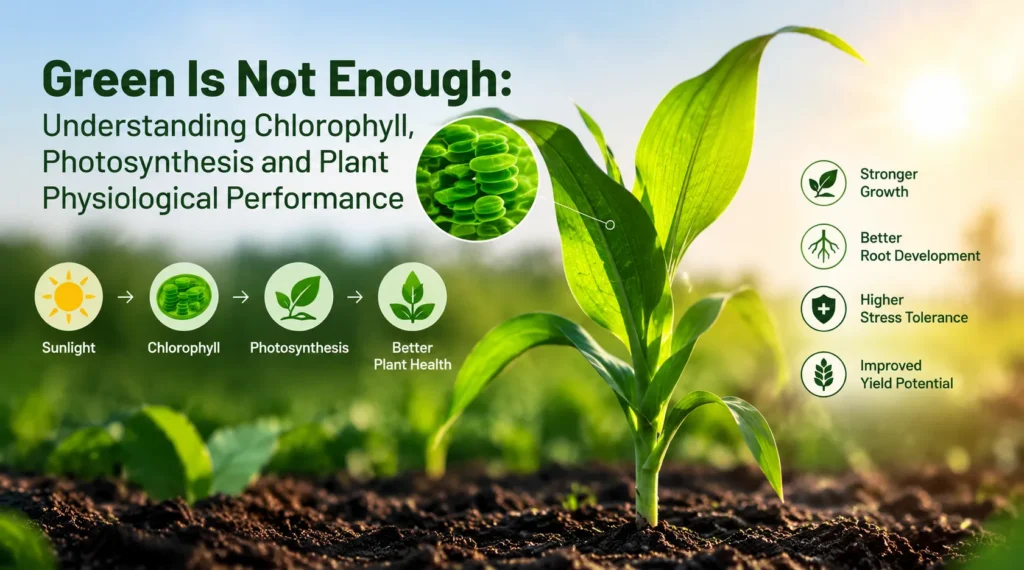
Measurements such as SPAD readings, chlorophyll index, chlorophyll fluorescence, leaf area, and leaf-senescence percentage can help assess changes in leaf function and canopy development.
These measurements can be particularly useful when combined with water-status, growth, biomass, and yield observations.
The objective is not simply to determine whether a crop remains green. It is to understand whether the crop is maintaining the functions required for continued growth and productive development.
Membrane Stability Under Salinity Stress
Salinity can also affect cellular stability.
Where validated protocols are available, electrolyte leakage and other membrane-stability measurements can provide additional information about tissue condition under a defined stress treatment.
These measurements should not be treated as independent proof of plant protection. Their value comes from comparing them with other physiological and structural indicators under controlled or clearly defined conditions.
This broader approach can make salinity stress indicators more meaningful for technical evaluation.
Looking at the Whole Plant
Salinity affects both below-ground and above-ground development.
A technical assessment may therefore include:
- Plant height
- Stem diameter
- Leaf number
- Branch number
- Root fresh and dry weight
- Shoot fresh and dry weight
- Canopy development
- Biomass retention
- Flower and fruit retention
- Yield-related outcomes
Looking at multiple parameters provides a more complete picture of how the crop is responding.
Instead of asking whether the plant is completely unaffected, the more useful question is whether enough structural and physiological function is being maintained for the crop to continue developing and recover when conditions improve.
How Salinity Response Changes With Crop Stage
A useful salinity stress management programme should consider the crop’s development stage.
Establishment Stage
Important observations may include:
- Germination
- Early root development
- Seedling vigour
- Stand uniformity
- Survival
Vegetative Stage
The focus can shift towards:
- Root and shoot expansion
- Water status
- Green-leaf continuity
- Biomass accumulation
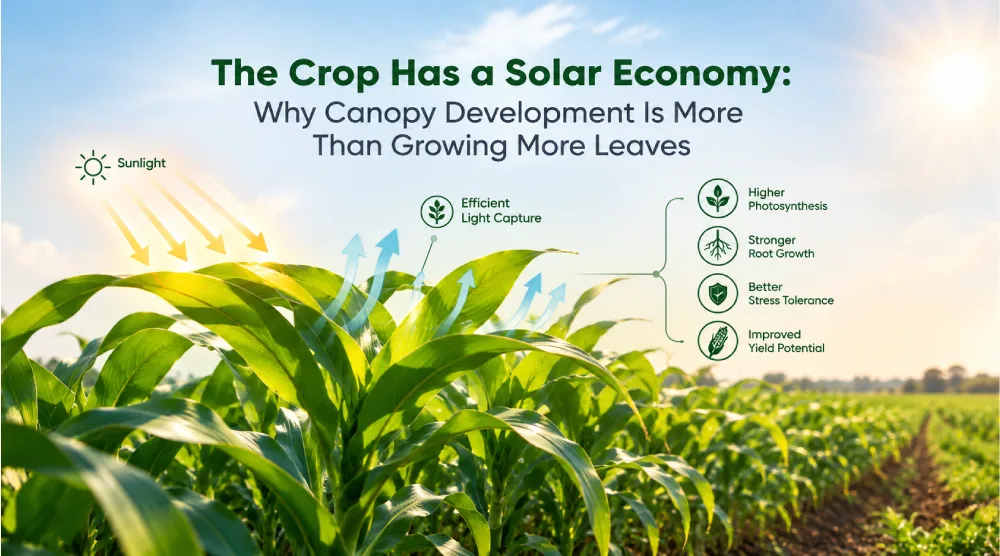
- Canopy development
Reproductive Stage
At this stage, assessments may include:
- Flower retention
- Fruit retention
- Reproductive continuity
- Biomass retention
- Yield stability
The same salinity level may therefore have a different practical impact depending on when exposure occurs.
A Three-Stage Approach to Salinity Stress Management
Rather than waiting for visible damage, a preventive programme can be structured around three stages.
1. Before Stress Intensifies
The first step is to understand the crop’s starting condition.
Questions may include:
- Is the root system sufficiently developed?
- Is the canopy active?
- Is plant water status stable?
- What is the expected salinity level?
- Is the intervention appropriately timed?
Establishing a baseline makes later measurements more meaningful.
2. During the Stress Period
Once exposure occurs, the focus shifts towards tracking the crop’s response.
Parameters may include:
- Root development
- Relative Water Content
- Chlorophyll status
- Canopy condition
- Biomass
- Membrane stability
The purpose is to understand whether crop function is being maintained as pressure develops.
3. At the Productive Outcome
The final assessment should connect physiological observations with meaningful crop outcomes.
These may include:
- Survival
- Recovery growth
- Biomass retention
- Canopy continuity
- Flower and fruit retention
- Yield stability
This final stage helps distinguish an early physiological response from an outcome that actually matters to crop productivity.
The Role of Preventive Crop Stress Assessment
Salinity cannot always be avoided. However, its risk can often be identified earlier through information about soil conditions, irrigation-water quality, drainage, crop history, and expected exposure.
This is where preventive soil salinity management becomes important.
Rather than responding only after visible decline, growers and technical teams can establish baseline crop conditions, understand the expected stress environment, select appropriate measurements, and monitor the crop’s response over time.
For organisations developing or evaluating crop solutions, this type of structured assessment can also help connect product performance with measurable biological outcomes.
Can Biostimulants Support Crop Stress Management?
Biostimulants are one area being explored for improving plant growth, nutrient and water utilisation, and crop resilience under abiotic stress.
Trishul Biotech’s biostimulant portfolio focuses on formulations combining different biological and nutritional components to support crop growth and tolerance to abiotic stress. Its stress-management approach includes solutions designed to help alleviate the impact of environmental stress on crops.
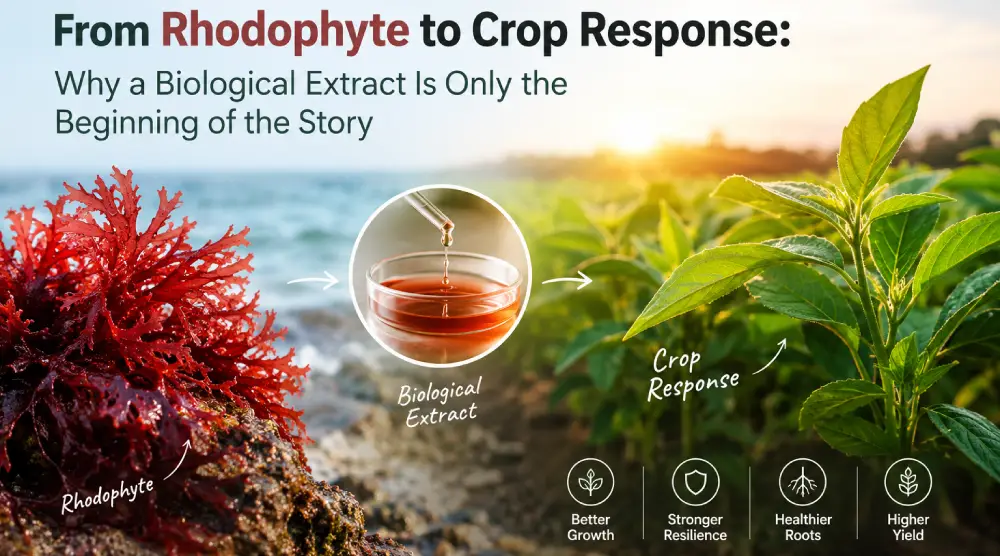
For example, Trishul Biotech’s seaweed-based products are positioned around plant growth, root development, crop vigour, and resilience to adverse environmental conditions.
However, product performance should be evaluated according to the specific crop, stress condition, application timing, and measurable outcomes rather than assuming that one solution will work equally across every crop or stress scenario.
How to Build a More Informed Salinity Strategy
A practical approach to plant salinity tolerance starts with measurement rather than assumptions.
A programme can bring together:
- Risk assessment – Understand soil, water, drainage, and expected salinity exposure.
- Baseline measurement – Establish crop condition before stress intensifies.
- Stage-specific monitoring – Track the parameters most relevant to the crop’s growth stage.
- Physiological assessment – Monitor water status, chlorophyll function, root development, and other relevant indicators.
- Structural assessment – Track root and shoot growth and biomass.
- Productive assessment – Connect physiological responses with recovery, reproductive performance, and yield.
This creates a more complete picture than relying on visible symptoms alone.
Final Thoughts
Salinity stress in plants is not simply a problem that begins when leaves show damage. The response can develop progressively through changes in root function, water balance, leaf activity, structural development, and reproductive performance.
That is why early assessment matters.
Understanding the crop before exposure, monitoring its response during stress, and evaluating the eventual productive outcome can provide a stronger foundation for salinity stress management.
In production systems where salinity is a known risk, the important question is not only whether stress can be seen.
It is whether the crop is prepared for the pressure before the damage becomes visible.
Explore Trishul Biotech’s Crop Stress Solutions
Trishul Biotech works across agricultural biotechnology, including biostimulants, biofertilisers, crop protection, soil health, and stress-management solutions. The company also provides soil health analysis, water analysis, plant health analysis, and fertiliser analysis, which can support a more data-driven approach to crop and input assessment. For more information, contact sales@trishulbiotech.com.
Also Read:-
- Salinity Stress in Crops: Understanding the Osmotic and Ionic Challenge
- Drought Stress in Crops: Why Plant Water Status Matters
More Useful Links:-
Agricultural Biotechnology Company | Organic Fertilizer For Plants | Biostimulant Products In Agriculture